Helping people ask, and helping offices answer, so that public decisions can be seen and questioned.
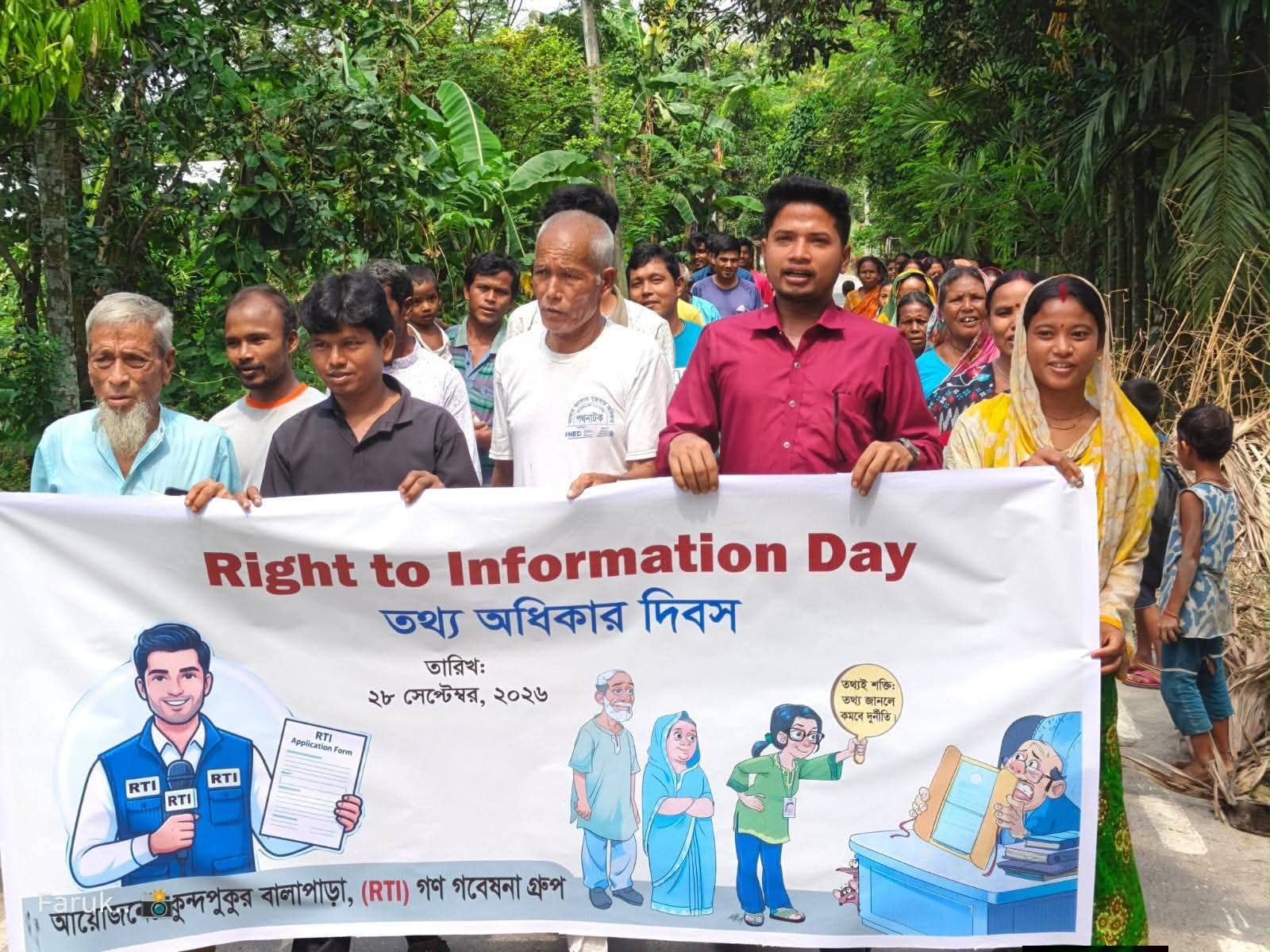
Fig: Right to Information Day 2026.
AT A GLANCE
Theme
Right to Information
Status
Ongoing
Where
Bangladesh
Period
...
Funded by
...
Partners
...
Strengthens Transparency and Accountability: The Right to Information Act empowers ordinary citizens to access public information, holding public institutions accountable.
Turns Passive Citizens into Active Participants: When people internalize that access to information is their personal right—not just an abstract law for government offices—they gain the confidence to protect their rights and drive collective social change.
Builds Community Agency: Recognizing their right to information enables marginalized communities to mobilize their own resources, question their realities, and solve local challenges without relying solely on external institutional support.
Promotes Participatory Action Research (Ganogobeshona): RIB carries forward Professor Anisur Rahman's philosophy of Ganogobeshona, treating ordinary people as active participants who investigate their own challenges and lead collective action rather than passive research subjects.
Fosters Community Ownership of Rights: Rather than just distributing awareness materials, RIB works to build a mass partnership where communities take independent initiative—such as locally organizing and funding International Right to Information Day celebrations across northern districts like Panchagarh, Nilphamari, Dinajpur, and Rangpur.
Advances Human Rights and Governance: Broadly, RIB conducts research-driven initiatives focused on promoting human rights, transparency, good governance, and sustainable development in Bangladesh.