
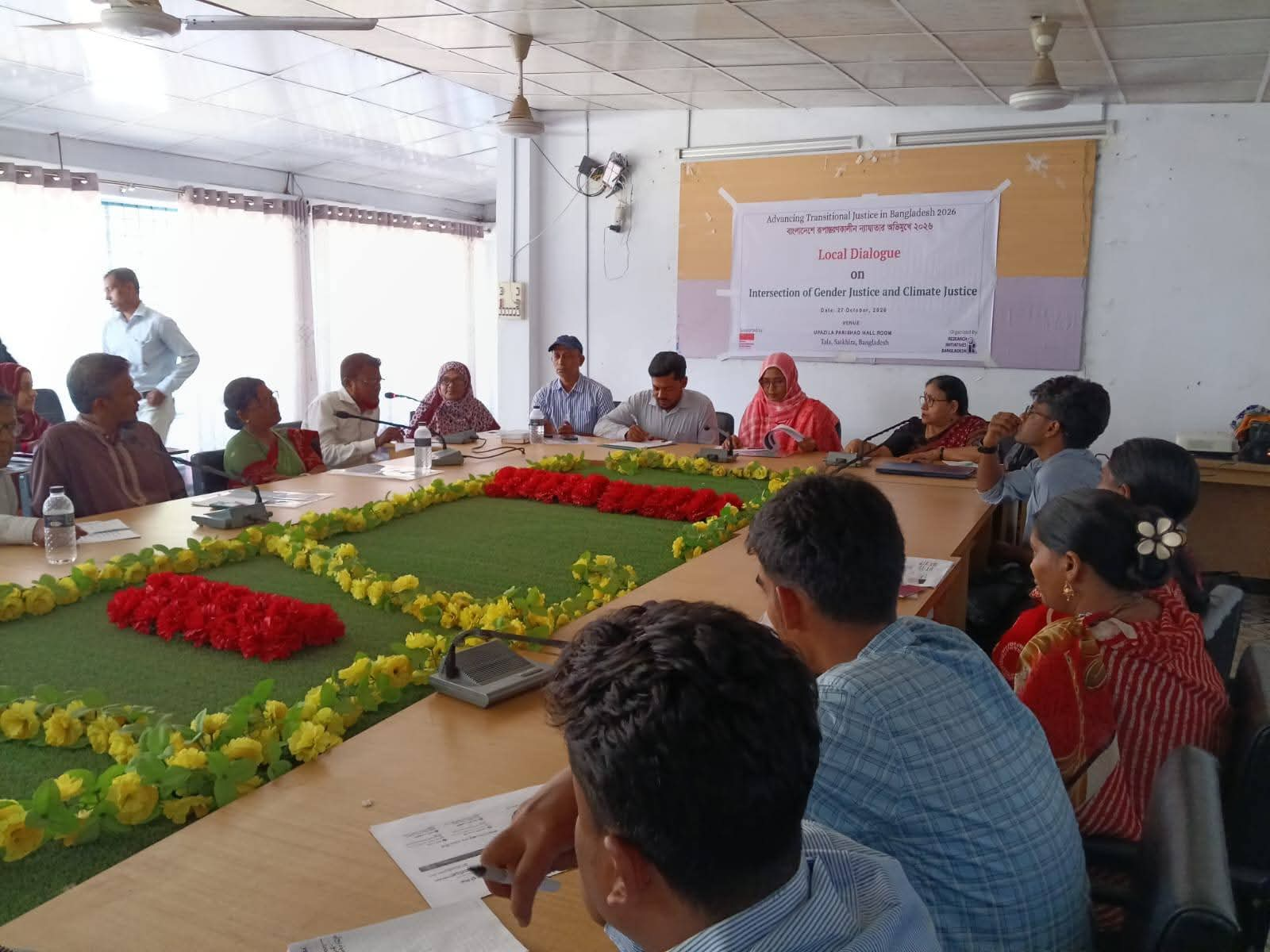
Research Initiatives Bangladesh (RIB), with support from Rosa-Luxemburg-Stiftung (RLS) South Asia, organised a local dialogue titled “Intersection of Gender Justice and Climate Justice” at the Tala Upazila Parishad Hall Room in Tala, Satkhira. The dialogue brought together government officials, civil society leaders, educators, journalists, youth representatives and women’s groups to discuss the interconnected challenges of gender inequality and climate change in Bangladesh.
Project Theme: Intersection of Gender Justice and Climate Justice
Organised by: Research Initiatives Bangladesh (RIB)
Supported by: Rosa-Luxemburg-Stiftung (RLS) South Asia
Event: Local Dialogue on Gender Justice and Climate Justice
Date: To be confirmed
Venue: Tala Upazila Parishad Hall Room, Tala, Satkhira, Bangladesh
Location: Tala, Satkhira, Bangladesh
The discussion provided a platform for local stakeholders to exchange perspectives on the unequal impacts of climate change, the experiences of frontline communities and the importance of ensuring women’s meaningful participation in climate-related decision-making.
Understanding the Intersection of Gender Justice and Climate Justice
The dialogue focused on the relationship between climate change and existing social inequalities, particularly the ways in which environmental challenges affect women and marginalised communities.
Participants discussed the tension between profit-driven global climate agendas and the lived realities of communities directly experiencing the consequences of climate change. They highlighted that climate change is not simply an environmental issue; it is also closely connected to questions of social justice, equality, economic opportunities and human rights.
Women and marginalised populations frequently experience disproportionate impacts from climate-related disruptions. Existing inequalities can make it more difficult for them to access resources, respond to environmental challenges and participate in decisions that affect their lives.
The discussion emphasised that meaningful climate justice requires addressing these underlying inequalities and recognising the specific experiences and needs of affected communities.
Keynote Presentation by Research Initiatives Bangladesh
The keynote presentation was delivered by Suraiya Begum, Director and Project Coordinator of Research Initiatives Bangladesh (RIB).
Her presentation highlighted the gendered dimensions of climate change and the importance of placing women’s experiences, knowledge and leadership at the centre of climate action.
The presentation also contributed to the discussion on the need to move beyond conventional approaches to climate adaptation. It emphasised the importance of recognising local knowledge, strengthening community participation and developing responses that reflect the actual challenges faced by people living in climate-affected areas.
The discussion further highlighted that women’s empowerment and local leadership should not be treated as secondary considerations. Rather, they are essential components of effective and equitable climate action.
Participation of Government Officials and Local Stakeholders
The dialogue brought together representatives from government institutions, civil society organisations, educational institutions, media and local communities.
Among the participating government officials were Jannatul Afroz Sworna, Upazila Nirbahi Officer (UNO), Tala, Satkhira; Arifuzzaman, Upazila Social Service Officer; Amirul Islam, Youth Development Officer; and Aleya Khatun, representative of the Department of Women Affairs.
Civil society and media representatives also contributed to the discussion, including journalist M. A. Faisal and Achintya Saha, Executive Director of Bhumija Foundation. Other participants included Imran Rabby, Executive Director of Greenman; Khosru Rahman, Union Parishad Member; local school headteachers, local NGO leaders, youth representatives and women’s collectives.
The participation of stakeholders from different sectors created an opportunity to share local experiences, identify challenges and explore ways to strengthen collective action on gender and climate justice.
Strengthening Community-Led Climate Action and Resilience
An important theme emerging from the dialogue was the need to strengthen locally led approaches to climate adaptation and resilience.
Participants highlighted that communities directly affected by climate change should have meaningful opportunities to contribute to the decisions and initiatives designed to address their challenges. Their experiences, knowledge and priorities need to be reflected in climate-related policies and development programmes.
The discussion also underscored the responsibility of government institutions and development stakeholders in promoting equitable climate responses. Stronger institutional engagement, inclusive planning and meaningful community participation are necessary to ensure that climate adaptation initiatives address the needs of women and other marginalised groups.
Recognising women’s leadership and supporting their participation in local decision-making can contribute to more inclusive and responsive approaches to climate resilience.
Connecting Gender Equality with Climate Action
The dialogue reaffirmed that climate justice cannot be achieved through environmental interventions alone. It also requires addressing the social and economic inequalities that influence how different groups experience climate change.
Women and marginalised communities must be recognised not only as groups affected by environmental challenges but also as important contributors to solutions. Their knowledge, leadership and participation can help shape more effective responses to climate-related risks.
By creating opportunities for dialogue among government officials, civil society organisations, educators, journalists and community representatives, initiatives of this nature can help strengthen awareness and encourage collaborative approaches to climate justice.
Moving Towards Inclusive and Equitable Climate Responses
The local dialogue in Tala provided an important platform for discussing the interconnected challenges of gender inequality and climate change. It highlighted the importance of community participation, women’s empowerment, local leadership and institutional responsibility in building climate resilience.
Through such initiatives, Research Initiatives Bangladesh continues to promote discussions on social justice, equality and the rights of marginalised communities. By bringing diverse stakeholders together, RIB seeks to encourage approaches that recognise local realities and ensure that the voices of affected communities are included in broader development discussions.
Building a climate-resilient and equitable society requires collective efforts that place human dignity, equality and meaningful participation at the centre of climate action.
#ResearchInitiativesBangladesh #RIB #RosaLuxemburgStiftung #GenderJustice #ClimateJustice #CommunityResilience #ClimateAction #WomensEmpowerment #Satkhira #Bangladesh