
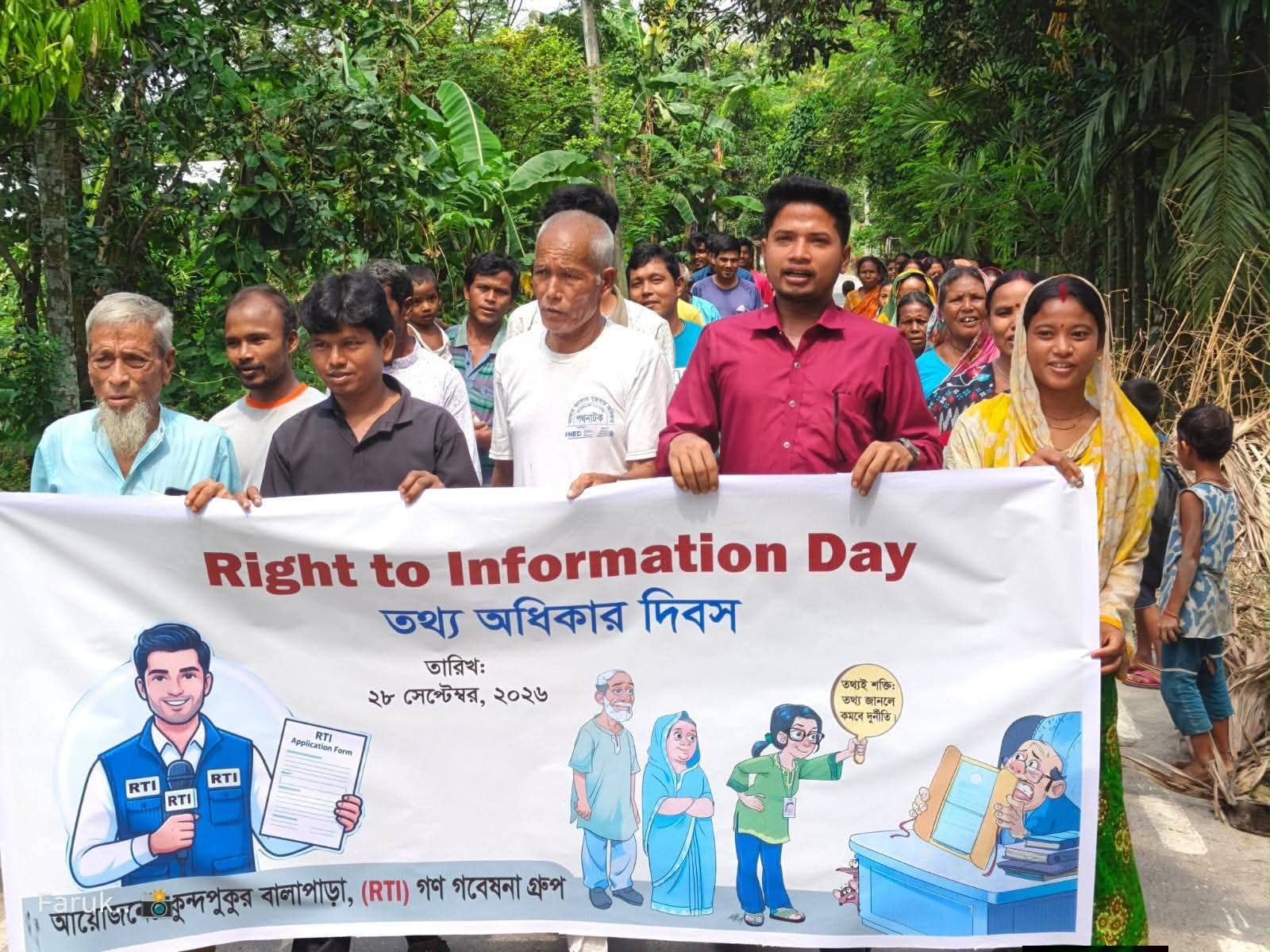
On 28 September 2026, International Right to Information Day was celebrated in an extraordinary way across Panchagarh, Nilphamari, Dinajpur and Rangpur. Rather than following conventional institutional arrangements, ordinary people came together on their own initiative to organise the celebrations, raise funds and participate in activities recognising their right to information. Their voluntary efforts demonstrated a meaningful sense of ownership of the Right to Information (RTI) Act and its importance in everyday life.
Organisation: Research Initiatives Bangladesh (RIB)
Occasion: International Right to Information Day 2026
Date: 28 September 2026
Event Locations: Panchagarh, Nilphamari, Dinajpur and Rangpur districts, Bangladesh
Approach: Community-led celebrations through voluntary contributions and local initiative
Conceptual Framework: Ganogobeshona (Participatory Action Research)
Key Feature: Community members independently mobilised resources, raised funds and organised their own celebrations of Right to Information Day.
The celebrations reflected an approach championed by Research Initiatives Bangladesh (RIB): ensuring that the Right to Information is not simply a law introduced to people but a right that they understand, embrace and actively exercise in their own lives.
Moving Beyond Conventional Observances of Right to Information Day
Traditionally, Right to Information Day celebrations are often organised by government institutions, with civil society organisations and members of the public attending as participants or spectators. In other instances, institutions arrange programmes where ordinary citizens remain largely part of the audience.
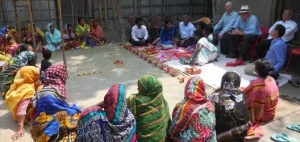
The celebrations across these four northern districts reflected a different approach. Here, the people for whom the law exists took the initiative themselves. They came together, organised gatherings and contributed their own resources to mark the occasion.
This shift in participation represents an important distinction. Instead of being passive recipients of awareness programmes, community members became the organisers and active contributors to the celebration.
For RIB, this is an important expression of the underlying purpose of its work on the Right to Information. The objective is not merely to deliver information about the RTI Act to people’s doorsteps, but to encourage its deeper internalisation within their everyday lives.
When people recognise that access to information is their own right, they are more likely to take responsibility for understanding, exercising and protecting that right.
Ordinary People’s Contributions, Extraordinary Community Ownership
One of the most remarkable aspects of the celebrations was the way ordinary community members arranged financial contributions and organised the events themselves.
A housewife who works as a day labourer contributed 50 taka from her hard-earned income, while a farmer contributed 100 taka. Community members also went door-to-door to collect funds and encourage others to participate in organising the celebrations.
These contributions may appear modest in monetary terms, but their significance extends far beyond the amounts collected. They represent personal commitment, voluntary participation and a growing sense of responsibility among people towards a right that belongs to them.
The willingness of individuals to contribute from their limited resources demonstrates that the celebration was not simply an externally organised programme. It was an occasion that people considered important enough to support through their own initiative.
Their involvement also challenges the assumption that meaningful public participation must depend on institutional funding or formal organisational arrangements. When communities recognise the value of an issue, they can mobilise their own resources, build collective understanding and take action together.
From Awareness to People’s Ownership of the Right to Information
The Right to Information Act is intended to enable citizens to access information and strengthen transparency and accountability. However, the effective use of this right depends not only on the existence of a legal framework but also on people’s awareness, confidence and willingness to exercise it.
RIB’s approach places particular importance on moving beyond the conventional delivery of information. The aim is to develop a sense of mass partnership in which people recognise themselves as the rightful owners and active users of the law.
The community-led celebrations offered an encouraging example of this process. People did not simply attend an event arranged for them; they took responsibility for making it happen.
Such participation can help strengthen people’s confidence, collective responsibility and understanding of their relationship with public rights and institutions.
The experience also highlights an important principle: awareness becomes more meaningful when people can translate their understanding into independent action.
Ganogobeshona: Participatory Action Research Led by the People
The spirit behind these community-led celebrations is closely connected to the concept of Ganogobeshona (Participatory Action Research), associated with the renowned reformist economist Professor Anisur Rahman.
Professor Anisur Rahman famously used this concept to describe the self-driven participation, collective inquiry and questioning spirit of ordinary people.
Moving beyond the boundaries of conventional research, Ganogobeshona recognises people not merely as subjects of research but as active participants in understanding their realities, identifying challenges and taking collective action.
This approach places people’s experiences, knowledge and initiatives at the centre of the process. It values collective wisdom and encourages communities to become actively involved in shaping the issues that affect their lives.
RIB proudly carries forward the spirit of Ganogobeshona by promoting people’s participation, independent initiative and collective ownership. The celebrations of International Right to Information Day across the four districts reflected this philosophy in practice.
The community members’ decision to organise the events, contribute financially and mobilise their neighbours demonstrated how collective action can emerge when people recognise their own agency.
Strengthening Mass Partnership Through Collective Action
The experience across Panchagarh, Nilphamari, Dinajpur and Rangpur illustrates the importance of building a genuine partnership between people and the processes intended to advance their rights.
When community members take ownership of an initiative, their involvement becomes more meaningful than simply attending an organised programme. They contribute ideas, resources, time and effort, strengthening the foundation for continued collective engagement.
This form of participation also encourages people to recognise that the Right to Information is not an abstract legal provision belonging only to government offices or institutions. It is a right that exists for ordinary citizens and can be exercised through their awareness and initiative.
The celebrations therefore represented more than an observance of an international day. They offered an example of people-centred participation, where collective action and local initiative became central to recognising and promoting the right to information.
Acknowledging the People Behind the Initiative
Research Initiatives Bangladesh extends its heartfelt gratitude to all the community members who took the initiative, contributed their resources and worked together to organise the celebrations.
The contributions of the day-labourer housewife, the farmer and many other community members reflect the spirit of participation and collective responsibility that RIB seeks to encourage.
Their efforts demonstrate that meaningful social change does not always begin with large institutions or substantial financial resources. It can begin when ordinary people recognise their rights, come together and take responsibility for collective action.
As RIB continues to carry forward the spirit of Ganogobeshona, these community-led celebrations serve as an encouraging reminder that the true strength of the Right to Information lies in the people themselves.
When people understand that the law belongs to them, they can move beyond being passive recipients of information and become active participants in building a more informed, transparent and accountable society.
#ResearchInitiativesBangladesh #RIB #RightToInformationDay #RTI #InternationalRightToInformationDay #Ganogobeshona #ParticipatoryActionResearch #PeoplesParticipation #CommunityOwnership #Transparency #Accountability #Bangladesh