
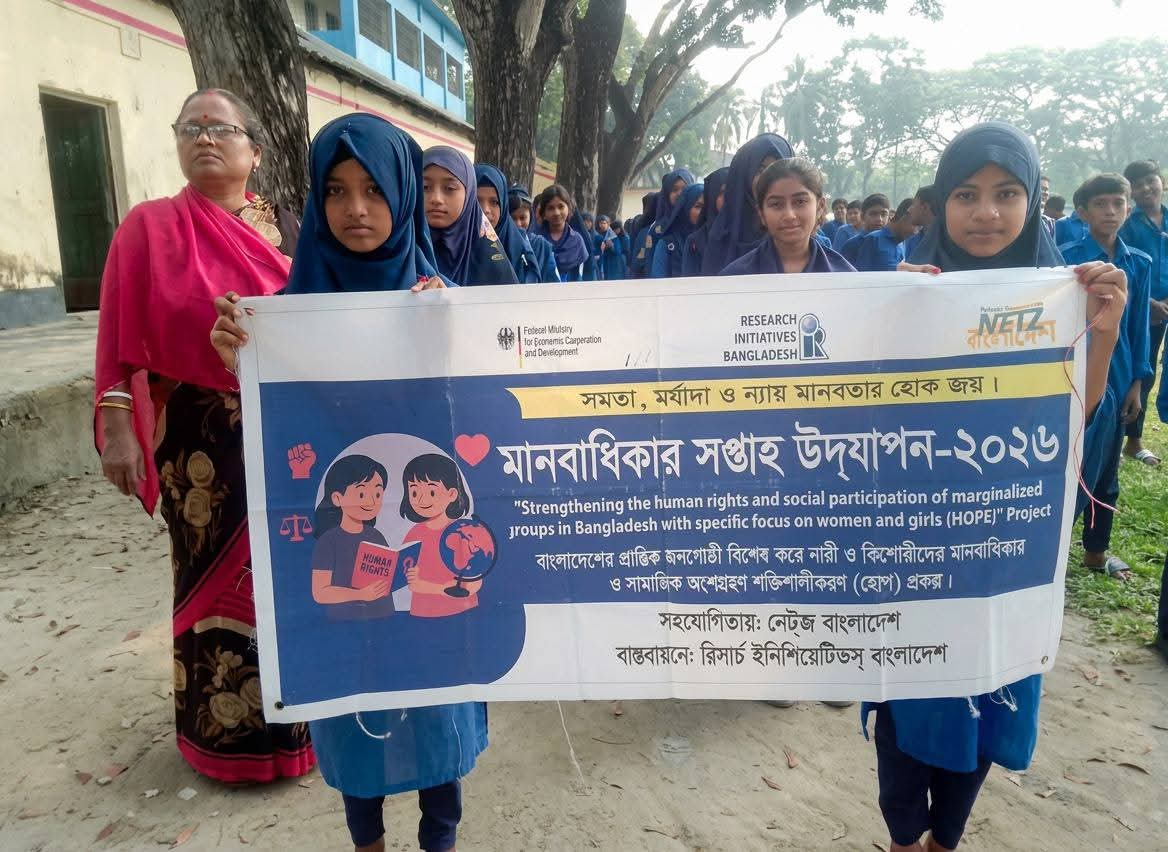
Research Initiatives Bangladesh (RIB), with support from BMZ and NETZ Bangladesh, successfully organised a five-day Human Rights Week in 24 secondary schools across Satkhira and Jashore districts under the HOPE Project. The initiative aimed to raise awareness among students, teachers, parents and local communities about human rights, gender equality, social inclusion and the importance of creating a society where everyone enjoys dignity, equality and respect.
Through a series of educational, creative and participatory activities, the programme encouraged students to learn about their rights, understand the importance of respecting others and engage with issues affecting their schools and communities.
Raising Awareness of Human Rights and Equality
The main objective of Human Rights Week was to strengthen awareness of human rights and related social issues among students and the wider school community.
The programme addressed several important themes, including gender equality, social inclusion, violence prevention, child marriage prevention, and the rights of minority and Indigenous communities.
These issues are closely connected to the everyday experiences, safety and opportunities of children and young people. Raising awareness in schools can help students understand the importance of equality, recognise discrimination and develop respect for people from different social and cultural backgrounds.
By bringing these discussions into school environments, the HOPE Project sought to encourage students to become more informed, responsible and respectful members of their communities.
Engaging Students Through Creative and Participatory Activities
Throughout the five-day programme, students participated in a variety of activities designed to make learning about human rights interactive and engaging.
The activities included:
- Awareness rallies to promote human rights messages.
- Discussions on human rights and related social issues.
- Quiz competitions to strengthen knowledge and understanding.
- Debate competitions encouraging critical thinking and the expression of ideas.
- Wall magazine activities providing opportunities for creative expression and information sharing.
- Drawing competitions allowing students to communicate their understanding through art.
- Gender-sensitive games promoting equality, participation and mutual respect.
These activities created opportunities for students to learn beyond conventional classroom lessons. They encouraged teamwork, communication, creativity and active participation while helping students explore important issues in an accessible way.
The combination of educational and creative activities also allowed students to express their perspectives and learn from one another.
Involving Teachers, Parents and Community Representatives
Human rights awareness cannot be strengthened through students alone. Schools, families and local communities all have important roles in promoting equality, preventing discrimination and creating safe environments for children.
Recognising this, teachers, parents’ representatives, School Management Committee (SMC) members and local Civil Society Organisation (CSO) youth members also participated in the Human Rights Week activities.
Their involvement helped connect school-based awareness activities with the wider community. Teachers and school representatives can contribute to creating respectful and inclusive learning environments, while parents and community members can help reinforce positive values and awareness beyond the classroom.
The participation of these stakeholders also highlighted the importance of collective responsibility in addressing violence, preventing child marriage and promoting the rights and dignity of all children.
Promoting Gender Equality and Social Inclusion
Gender equality and social inclusion were central themes of the programme. Through discussions, games and other activities, students were encouraged to understand the importance of equal rights, opportunities and participation.
The programme also addressed violence prevention and child marriage prevention, drawing attention to issues that can affect children’s safety, education and future opportunities.
Another important focus was the rights of minority and Indigenous communities. Promoting awareness of these rights helps students recognise the importance of diversity, challenge discriminatory attitudes and develop respect for people from different backgrounds.
By introducing these subjects through school activities, Human Rights Week sought to encourage a culture of inclusion, mutual understanding and respect.
Developing Student Leadership and Responsibility
Beyond raising awareness, Human Rights Week provided students with opportunities to strengthen their communication, teamwork and leadership skills.
Activities such as awareness rallies, debates, discussions and competitions encouraged students to share their ideas, participate in group initiatives and express their understanding of important social issues.
These experiences can help students develop confidence and a stronger sense of responsibility towards their schools and communities.
The programme also reinforced the idea that young people are not merely learners but can play an active role in promoting equality, challenging discrimination and encouraging positive change.
Creating Safe and Inclusive Learning Environments
Every student deserves an educational environment where they feel safe, respected and included. Schools have an important responsibility to promote dignity, prevent violence and ensure that students can participate in learning without discrimination.
Through Human Rights Week, the HOPE Project encouraged students and school communities to reflect on the values and practices needed to create such environments.
The involvement of teachers, parents’ representatives, SMC members and local CSO youth members helped emphasise that building inclusive schools requires cooperation among different stakeholders.
By promoting awareness of human rights, gender equality and social inclusion, the initiative is encouraging schools to become environments where diversity is respected and every student’s dignity is recognised.
Advancing Human Rights Through the HOPE Project
The five-day Human Rights Week across 24 secondary schools in Satkhira and Jashore represents an important awareness-raising initiative under the HOPE Project, titled “Strengthening the Human Rights and Social Participation of Marginalized Groups in Bangladesh with Specific Focus on Women and Girls.”
Through this initiative, Research Initiatives Bangladesh continues to work towards strengthening human rights awareness and encouraging the social participation of marginalised groups, with particular attention to women and girls.
The programme brought students, teachers, parents and community representatives together around shared values of equality, dignity and respect. It also demonstrated the importance of engaging young people in discussions about the rights and responsibilities that shape a fair and inclusive society.
Building a society where everyone enjoys equal rights requires awareness, participation and collective commitment. By encouraging students to understand their rights and respect the rights of others, the HOPE Project is contributing to the development of a more inclusive and respectful learning environment.
Together, we can build a society where everyone enjoys equal rights, dignity and respect.
#RIB #HOPEProject #HumanRightsWeek #HumanRights #GenderEquality #SocialInclusion #ChildMarriagePrevention #BMZ #NETZBangladesh