
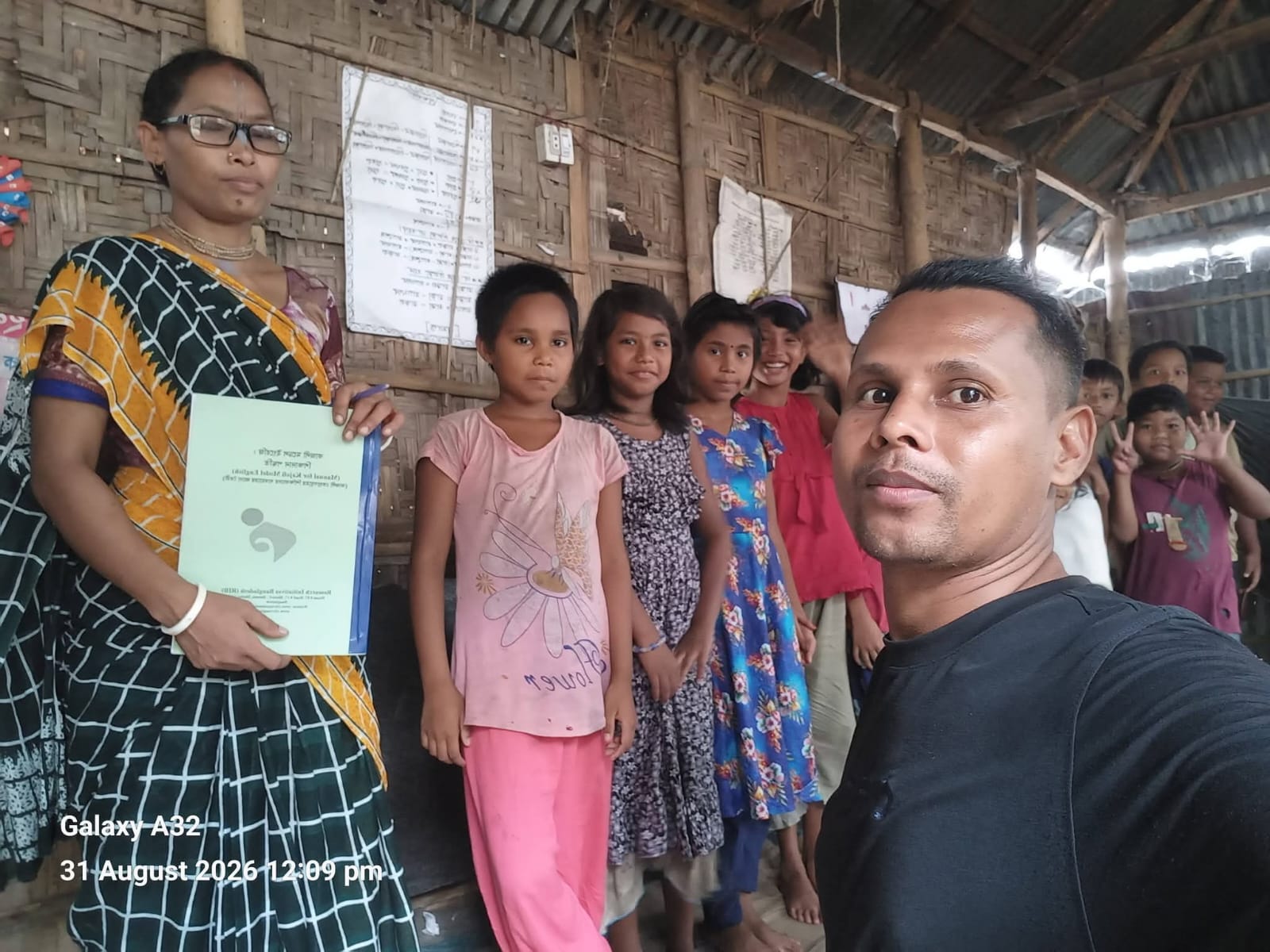
Children, teachers and community members associated with the Kajoli Early Childhood Learning Model are delighted to receive a new manual introducing an innovative approach to teaching English. Their enthusiasm reflects more than the excitement of receiving a new learning resource; it represents the hope and possibilities that emerge when children are given opportunities to learn in an accessible, enjoyable and supportive environment.
Project Information
Research Initiative: Kajoli Early Childhood Learning Model
Organisation: Research Initiatives Bangladesh (RIB)
Research Focus: Exploring joyful and inclusive approaches to early childhood education, including new methods of teaching English.
Key Activity: Introduction of a new English teaching manual for children and associated teachers.
Research Objectives:
- Explore accessible and enjoyable approaches to children’s learning.
- Develop new approaches to teaching English.
- Encourage community responsibility and participation in education.
- Improve access to quality education for children from marginalised communities.
Research Leadership: Dr. Shamsul Bari, Chairman, Research Initiatives Bangladesh (RIB)
Date: 31 August 2026 (date visible in the supplied photograph;
The initiative is part of an ongoing research programme on children’s education led by Research Initiatives Bangladesh (RIB) through its Kajoli Early Childhood Learning Model. The research aims not only to explore new ways of teaching English but also to understand how children can learn naturally in a joyful environment, how communities can take greater responsibility for education and how children from marginalised communities can gain access to quality learning opportunities.
A New Approach to Teaching English
Learning a new language can become a challenging experience for young children when teaching methods do not adequately consider their learning needs, interests and everyday experiences. Creating an environment where children feel comfortable, encouraged and motivated is therefore important for making the learning process meaningful.
The new English teaching manual under the Kajoli Early Childhood Learning Model represents an effort to explore a more accessible and engaging approach to language learning.
The initiative places importance on how children learn, not simply on what they are taught. It seeks to create opportunities for children to learn in an environment where curiosity, participation and enjoyment are valued.
The enthusiasm of the children and teacher upon receiving the manual reflects the excitement surrounding this new approach. It also highlights the importance of providing teachers with learning resources and teaching strategies that can support their work with young learners.
Learning Beyond the Classroom
The Kajoli Early Childhood Learning Model recognises that children’s education is connected to the wider social environment in which they grow and develop.
Families and communities can play an important role in creating supportive conditions for children’s learning. When community members become involved in educational initiatives, learning can develop beyond the boundaries of the classroom and become a shared responsibility.
One of the central objectives of RIB’s ongoing research is to explore how communities can take a more responsible and active role in supporting children’s education.
The involvement of teachers, children and community members in the Kajoli initiative reflects this broader vision. Their participation helps connect educational approaches with the experiences and realities of the communities where children live.
This community-centred perspective is particularly important for children from marginalised backgrounds, who may face barriers to accessing quality educational opportunities.
Expanding Access to Quality Education for Marginalised Children
Every child deserves the opportunity to learn, develop and explore their potential, regardless of their social or economic background.
However, children from marginalised communities may experience challenges in accessing quality education and appropriate learning opportunities. Addressing these barriers requires approaches that consider local realities and make learning accessible, meaningful and enjoyable.
Through the Kajoli Early Childhood Learning Model, RIB’s research seeks to explore ways of improving educational access for these children.
The initiative goes beyond developing a new method of teaching English. It also examines how a supportive learning environment can be created, how teachers can be equipped with appropriate teaching approaches and how communities can contribute to children’s educational development.
By connecting these different elements, the research aims to contribute to a more inclusive approach to early childhood education.
The Importance of Teachers and Community Participation
Teachers are central to children’s learning experiences. Their teaching methods, encouragement and ability to create a welcoming classroom environment can influence how children engage with education.
The introduction of the new English teaching manual offers an opportunity to support teachers with additional guidance and teaching strategies. It reflects the importance of developing practical resources that respond to children’s learning needs.
At the same time, community participation remains an important part of the Kajoli approach. When teachers, families and community members share an interest in children’s education, they can collectively contribute to creating an environment where learning is valued and supported.
The excitement visible among the children and the teacher in the photograph reflects the human dimension of this initiative. A new learning resource can represent an opportunity for children, a new teaching experience for educators and a source of hope for the wider community.
A Research Initiative Led by Dr. Shamsul Bari
The Kajoli Early Childhood Learning Model is part of Research Initiatives Bangladesh’s continuing research engagement with children’s education.
Behind this initiative are years of thought, experience and engagement with realities at the community level. Dr. Shamsul Bari, Chairman of Research Initiatives Bangladesh, is leading and actively contributing to the research and its implementation with deep personal commitment.
His continued involvement reflects the importance RIB places on exploring new pathways for children’s education, particularly approaches that promote joyful learning and inclusion.
The research brings together educational thinking, practical experience and community realities to explore how children can be supported in developing their abilities in an encouraging and accessible environment.
Making Education a Source of Joy and Opportunity
Education should be more than the process of transferring information from a teacher to a student. It should encourage curiosity, confidence, creativity and a genuine interest in learning.
When children enjoy the learning process, they are encouraged not only to acquire knowledge but also to develop a lasting enthusiasm for education.
The Kajoli Early Childhood Learning Model reflects this belief by exploring approaches that make learning more natural, enjoyable and inclusive. Its research also highlights the importance of community responsibility and the need to expand educational opportunities for children from marginalised communities.
Opening the door to education for one child means more than supporting an individual learner. It can also create opportunities for a family, strengthen a community and contribute to the future of the next generation.
Through this ongoing research initiative, Research Initiatives Bangladesh continues to explore how joyful and inclusive education can help children overcome barriers and realise their potential.
Because when education becomes a source of joy, children do not simply learn; they develop a love for learning. And that love can help them move beyond the barriers of marginalisation towards a future filled with possibilities.
#RIB #KajoliLearningModel #EarlyChildhoodEducation #JoyfulLearning #InclusiveEducation #QualityEducation #ChildrensEducation #CommunityParticipation #EnglishLearning #DrShamsulBari